
Home › Capabilities
One platform, every laboratory workflow
From patient registration to validated results and national reporting — plus the cross-cutting capabilities that carry across clinical, vector, and regulatory testing alike. No licensing fees. No vendor lock-in.
Try the demo Explore One Health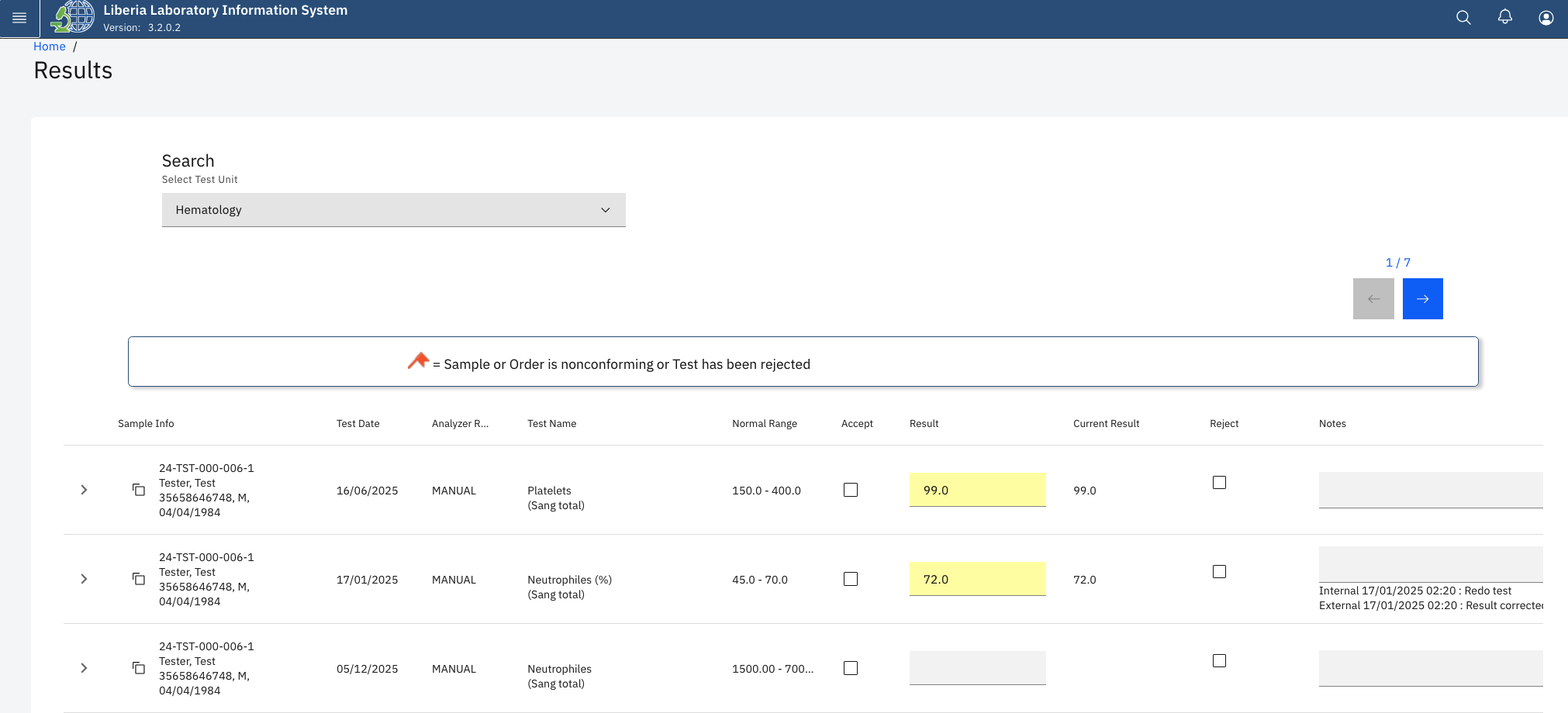
Everything the lab does — connected
OpenELIS runs the entire laboratory workflow end to end: register the patient, track the sample, enter and validate results, and report them out — for a single facility or a whole national network. It connects directly to your analyzers, so results flow in automatically instead of being retyped by hand. And no OpenELIS lab works in isolation — instances link to one another and feed the wider health system, so a result produced in one laboratory reaches the clinician who ordered it, the national programs that monitor it, and the next lab in the referral chain.
Everything your laboratory needs
Patient management
Every patient, one record — synced with your national registry and EMRs so demographics arrive automatically and duplicates disappear. The single source of truth your clinicians can trust.
Sample management
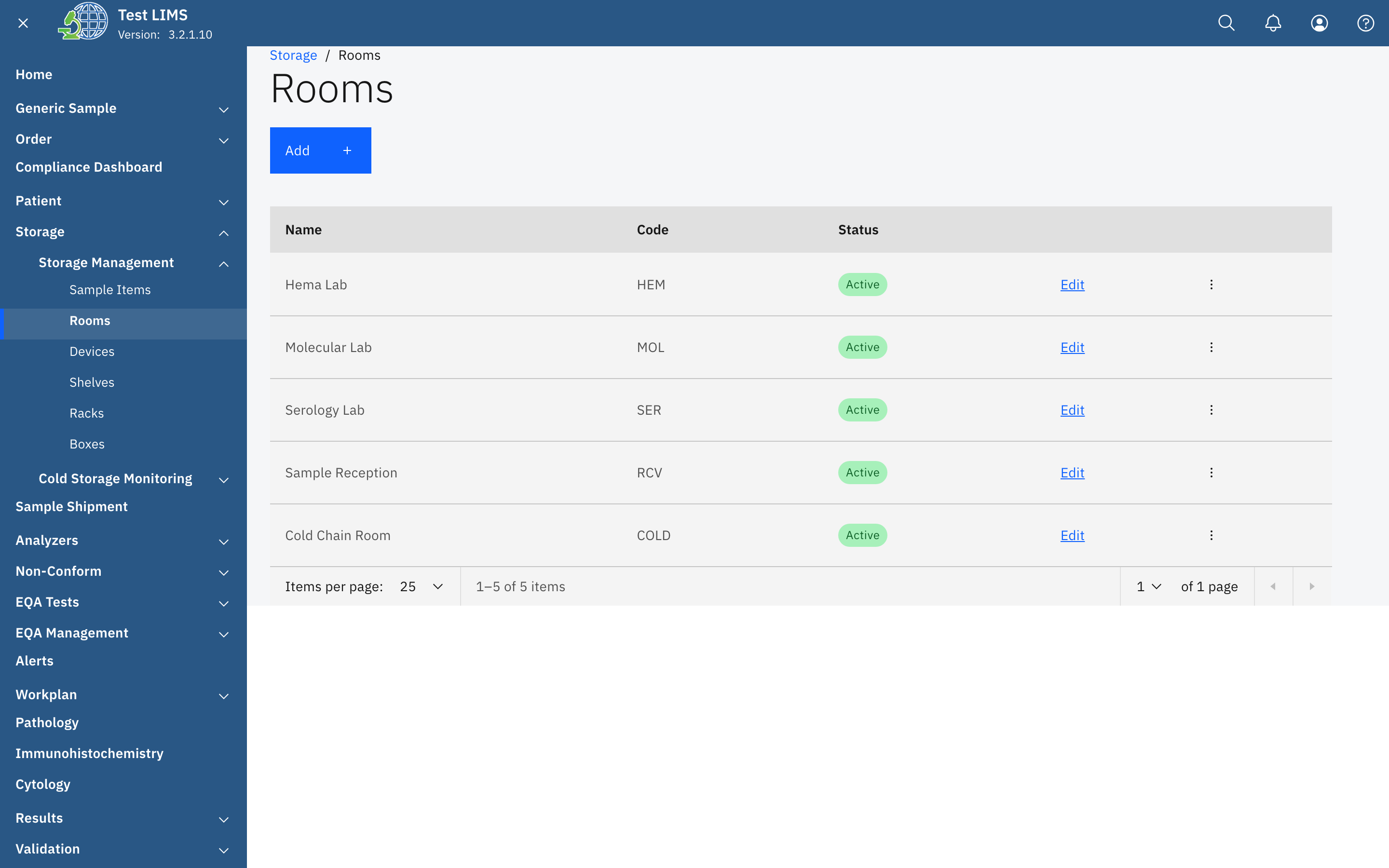
Follow every specimen from collection to disposal — aliquots, storage locations, barcode moves, and non-conformity workflows, all logged. When someone asks what happened to a sample, you have the answer instantly.
Results & analysis
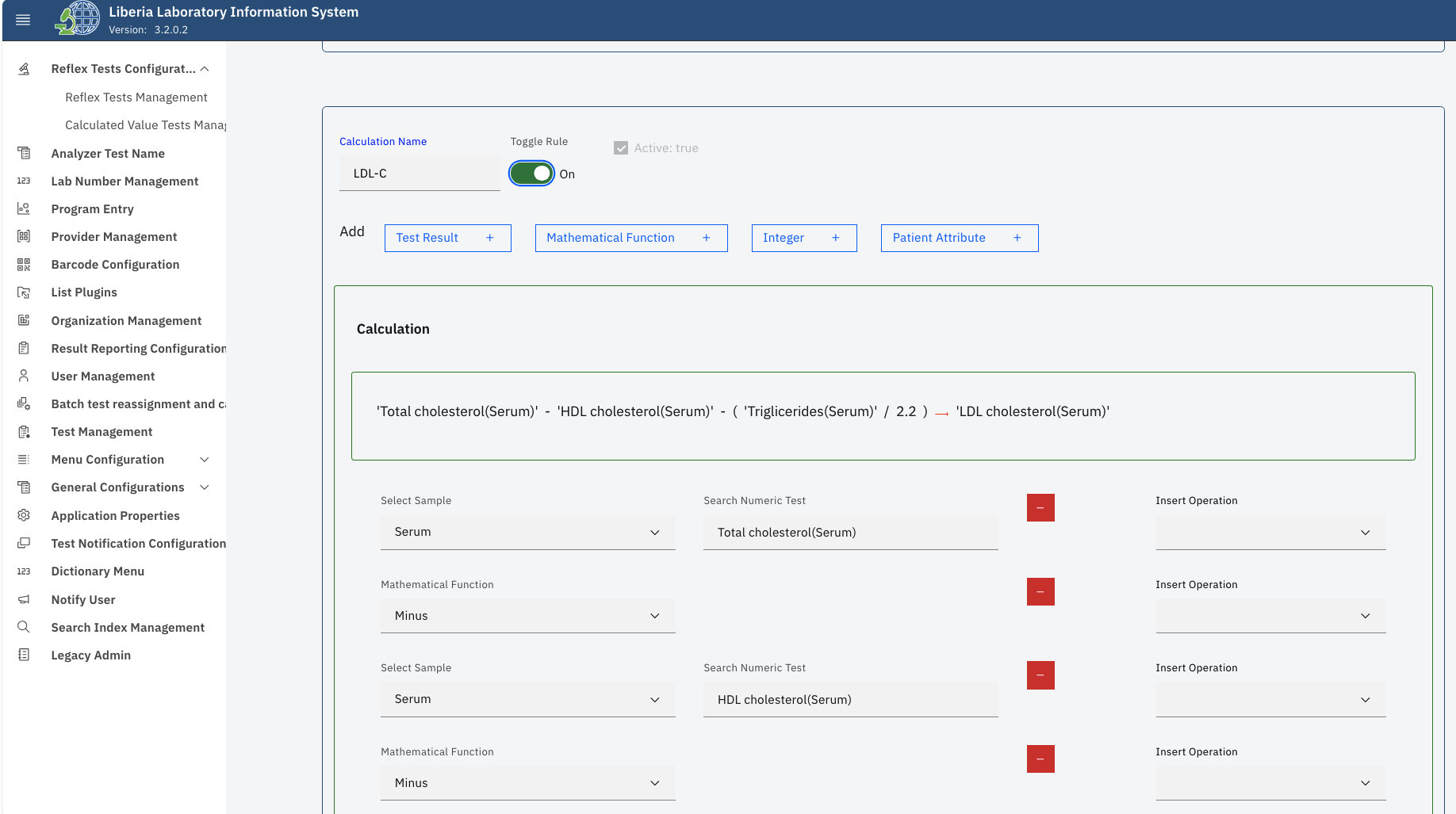
Handle anything from a routine chemistry panel to pathology and cytology. Build reflex rules and calculated values yourself — no programming — so the lab director, not IT, controls how tests behave.
Quality control
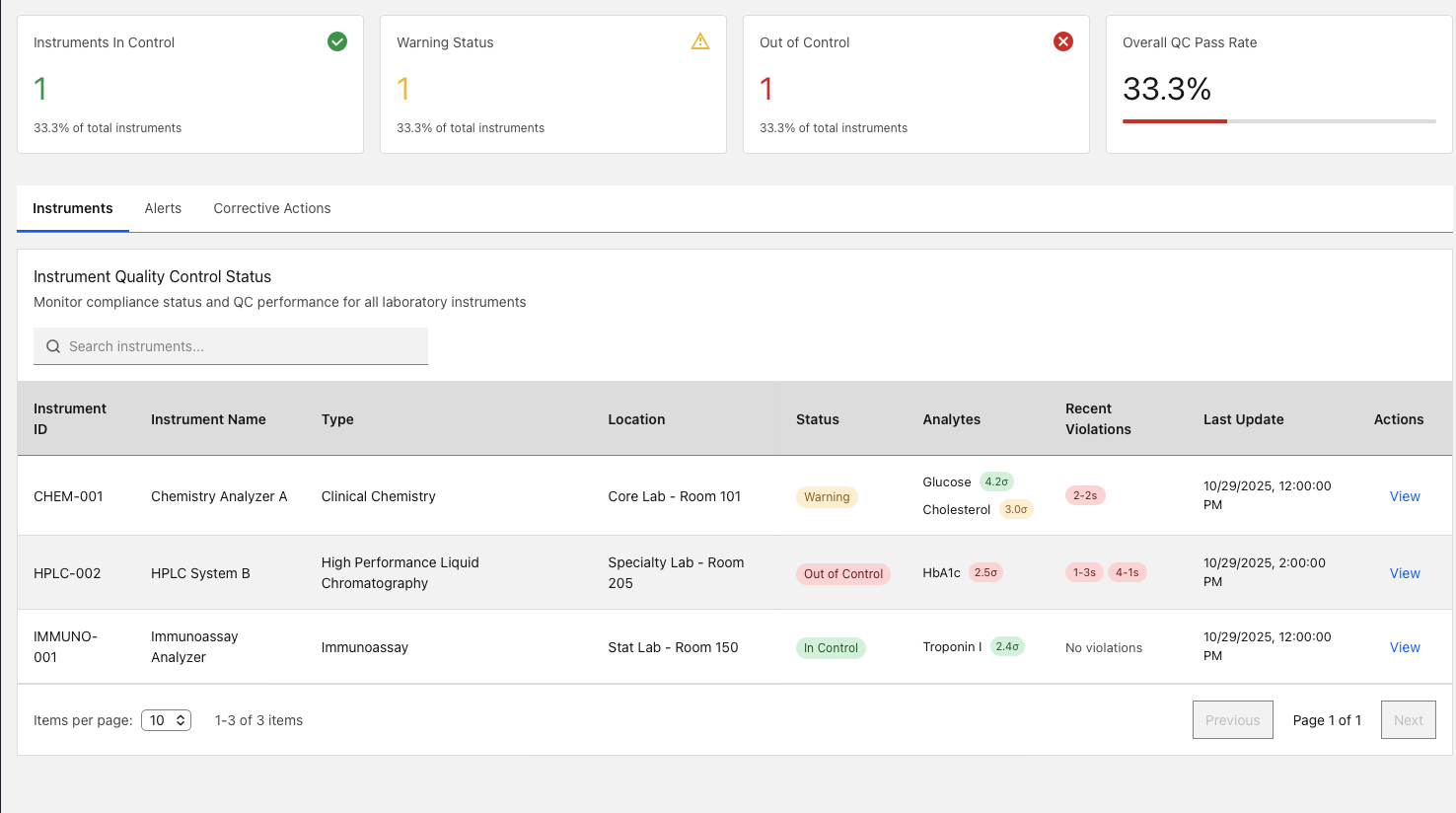
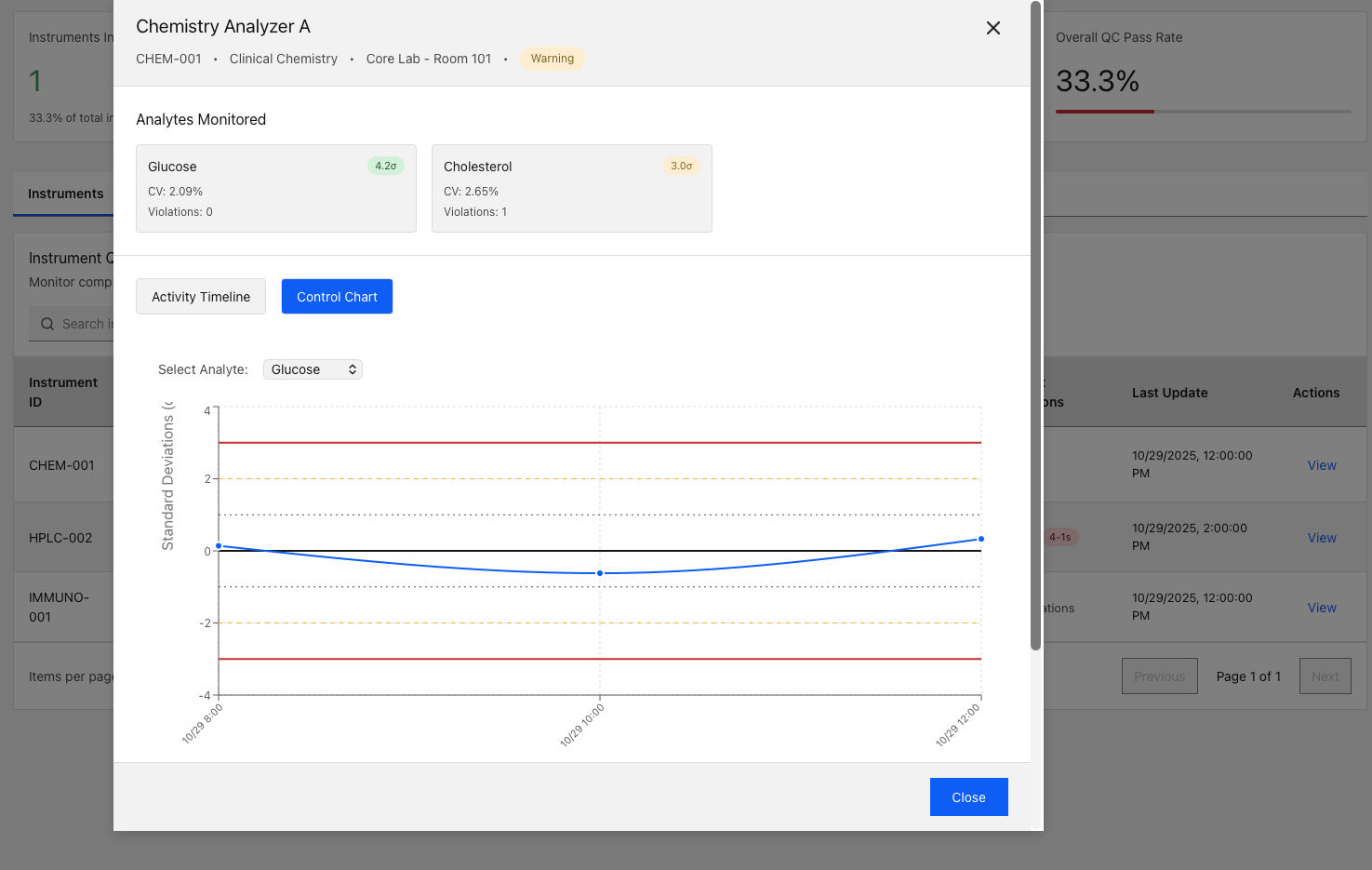
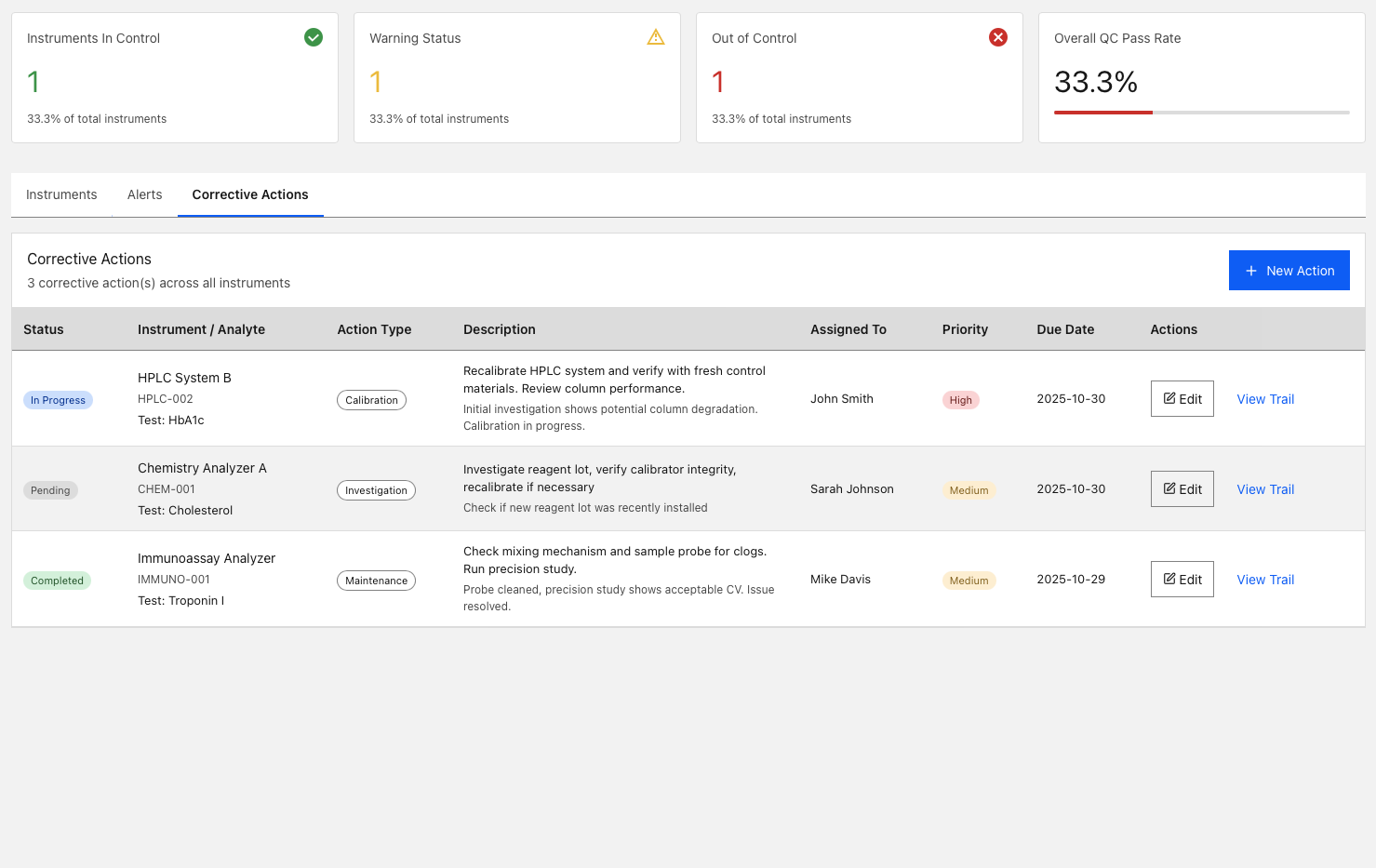
Quality baked into every workflow: reference-range enforcement, Westgard-rule monitoring, Levey-Jennings charts, and corrective-action tracking — the evidence auditors want for ISO 15189 and SLIPTA.
Compliance evaluation
Score any result against any regulation — environmental, food, pharmaceutical, product — with automatic pass/marginal/fail flags and one-click certificates. Compliance built into the result, not bolted on.
Interoperability
Connect to EMRs, national registries, surveillance systems, and other labs out of the box — and keep working offline when the network drops. Your lab becomes a node in the national health system, not an island.
Analyzer integration
If it speaks ASTM or HL7, OpenELIS already talks to it. Generic protocol drivers mean adding an instrument is field mapping in the UI — no custom code, no vendor project, no waiting on a release.
Inventory & equipment
Know what you have, what's expiring, and when equipment needs service. FEFO tracking, automated reorder alerts, and optional Odoo billing keep the lab running and the shelves stocked.
Security & compliance
Enterprise-grade protection for the most sensitive data in healthcare: granular role-based access, single sign-on, encryption in transit and at rest, and a complete audit trail — hardened for government networks.
Monitoring & analytics
Real-time dashboards for turnaround times, rejection rates, and system health — plus national reporting pipelines feeding DHIS2 and surveillance. Answers for program managers and ministries the moment they ask.
The clinical testing lifecycle
The mature, national-scale core — the workflow a laboratory runs every day, from a patient walking in to a validated result going out.
Patient management
Unified records that follow patients across your health system — no duplicate records, no manual re-entry.
Why it matters — Duplicate records waste staff time and confuse clinicians. Feeding a shared registry means every lab interaction strengthens one trustworthy health record — the foundation for continuity of care and reliable public-health reporting.
- Centralized registry integration. New patients sync instantly with your national client registry — one source of truth across facilities.
- Automatic EMR import. Orders from clinical systems bring patient demographics with them.
- Duplicate prevention. Search existing registries before creating records, cutting duplicates that compromise data quality.
- Flexible identifiers. Any combination of national IDs, facility numbers, and program identifiers to match your country's strategy.
Sample management
Complete traceability from collection to disposal — every sample's full story, captured automatically.
Why it matters — ISO 15189 requires demonstrated traceability — but the real payoff is operational: no lost specimens, no mismatched results, and an instant answer when a clinician asks where their patient's sample is.
- Configurable sample types with custom fields and workflows for anything from routine blood draws to specialized specimens.
- Collection details — collector, date/time, site, and handling notes, imported automatically from EMR orders.
- Non-conformity workflows that alert staff and trigger redraws when samples don't meet quality standards.
- Aliquoting & volume tracking with parent-child relationships and per-aliquot labels.
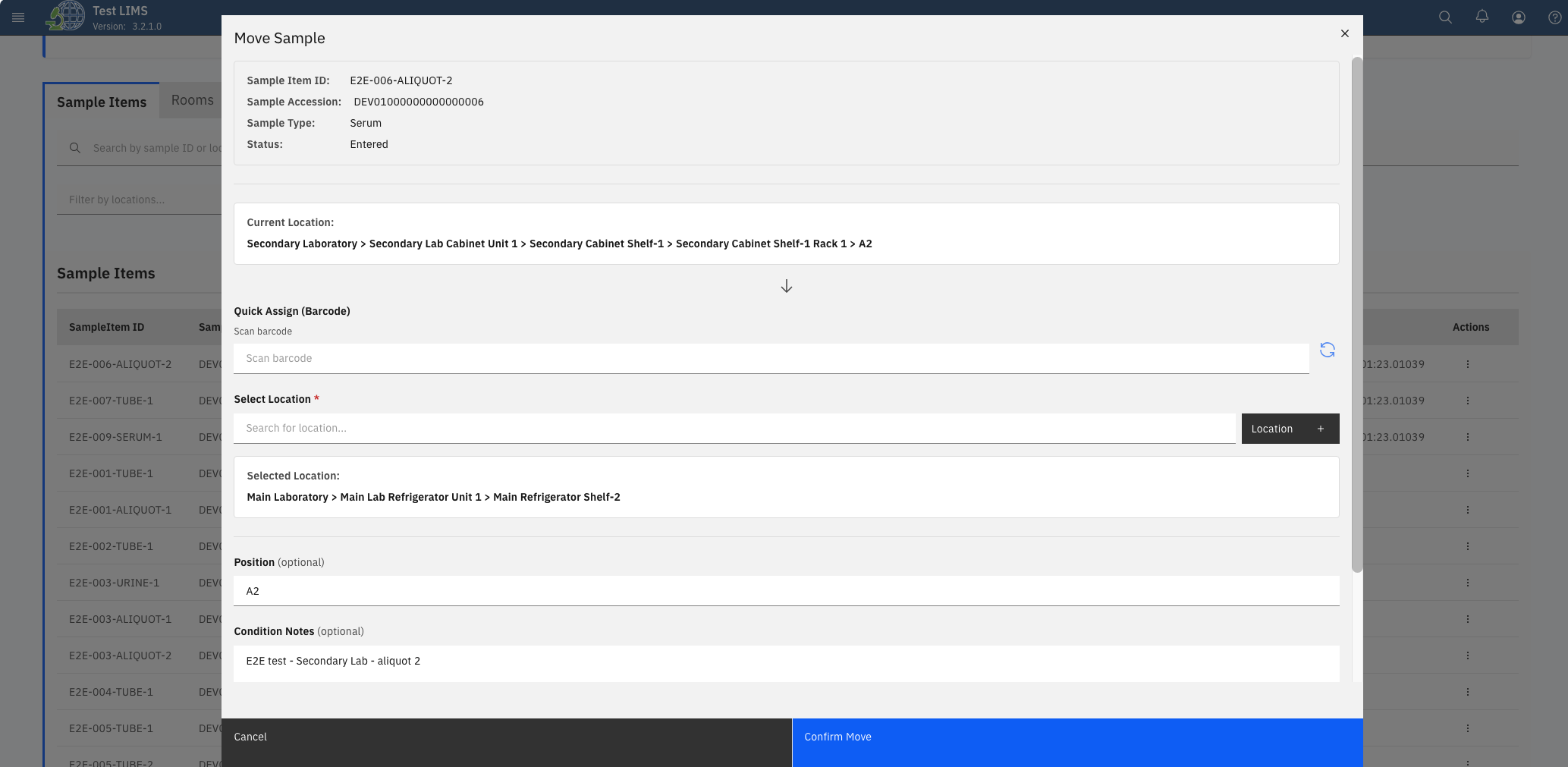
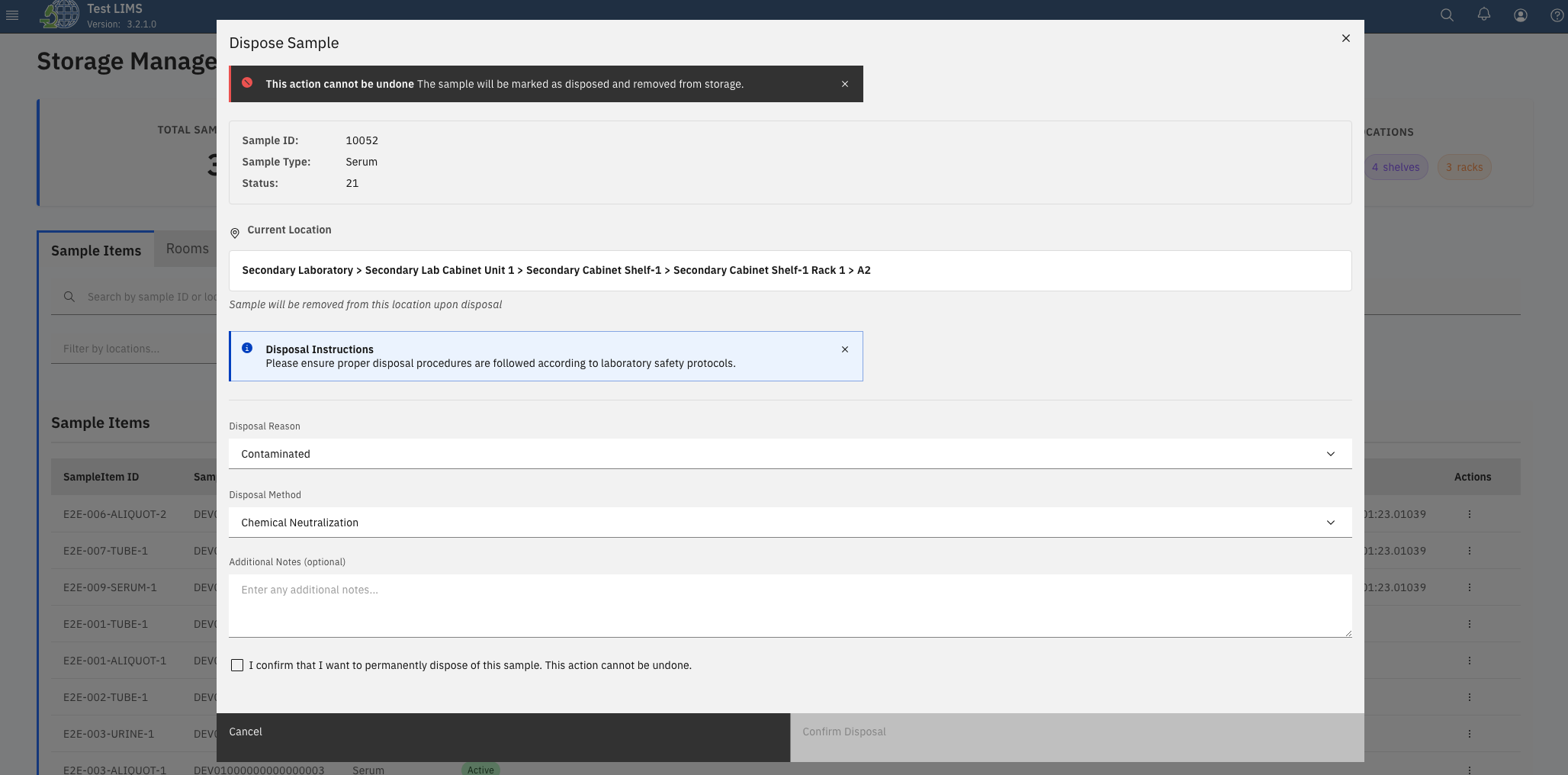
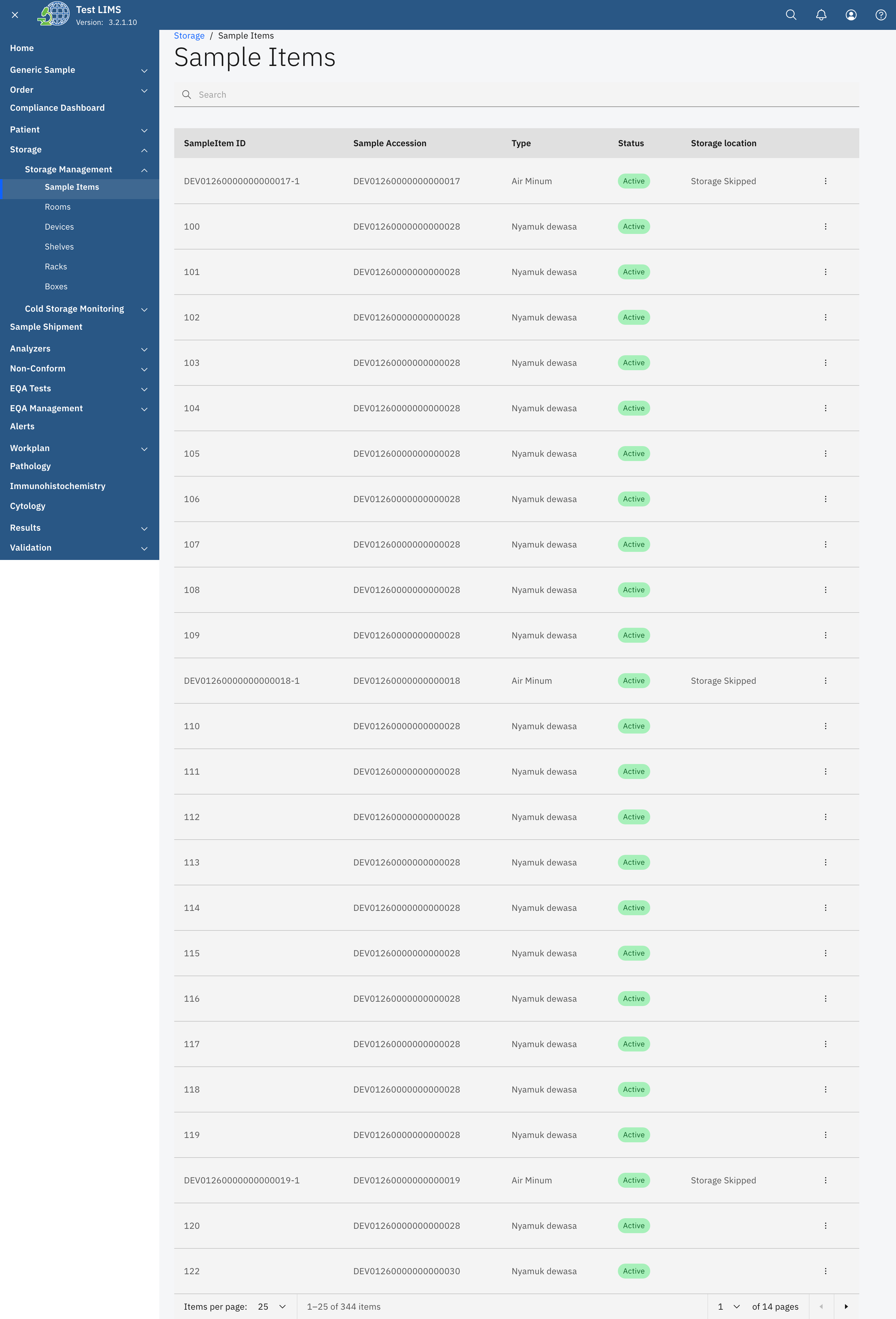
- Storage management — track location, move with barcode scanning, and document disposal with full audit trails.
Results & analysis
Flexible workflows that adapt to any testing complexity — configured by laboratory directors, not IT staff.
Why it matters — Testing algorithms are the heart of laboratory medicine. Putting them in the hands of lab directors instead of developers means faster turnaround, fewer errors, and workflows that match how your lab actually works.
- Intuitive results entry — from numeric values to categorical results, with input validation per test type.
- Clinical context — provisional diagnoses, clinician notes, and file attachments travel with the order.
- Customizable algorithms — build reflex rules and calculated values through the UI, no programming.
- Specialized workflows — purpose-built screens for Pathology, Cytology, and Immunohistochemistry with stage-based progression.
- Digital lab notebook — searchable, auditable procedure and observation notes linked to orders.
Quality control
Built-in quality that supports ISO 15189 and SLIPTA accreditation — woven into every workflow, not bolted on.
Why it matters — Accreditation to ISO 15189 or SLIPTA is increasingly tied to recognition and funding — and labs running OpenELIS have achieved it. The QC documentation auditors look for is generated as you work.
- Integrated QC checkpoints ensure control samples are run and reviewed before patient results are released.
- Reference-range enforcement — normal, reportable, and critical ranges enforced with clear visual indicators.
- Westgard-rule monitoring with Levey-Jennings charts (1:2s, 1:3s, 2:2s, R:4s, 4:1s, 10x) and violation alerts.
- Reference-laboratory referrals with chain-of-custody documentation.
- Corrective-action tracking with assignments, priorities, due dates, and audit trails.
Platform capabilities
The shared engine that spans every domain — the same analyzer integration, interoperability, and security serve clinical, vector, and regulatory testing alike. That's what makes OpenELIS one integrated system rather than separate applications.
Regulatory compliance evaluation
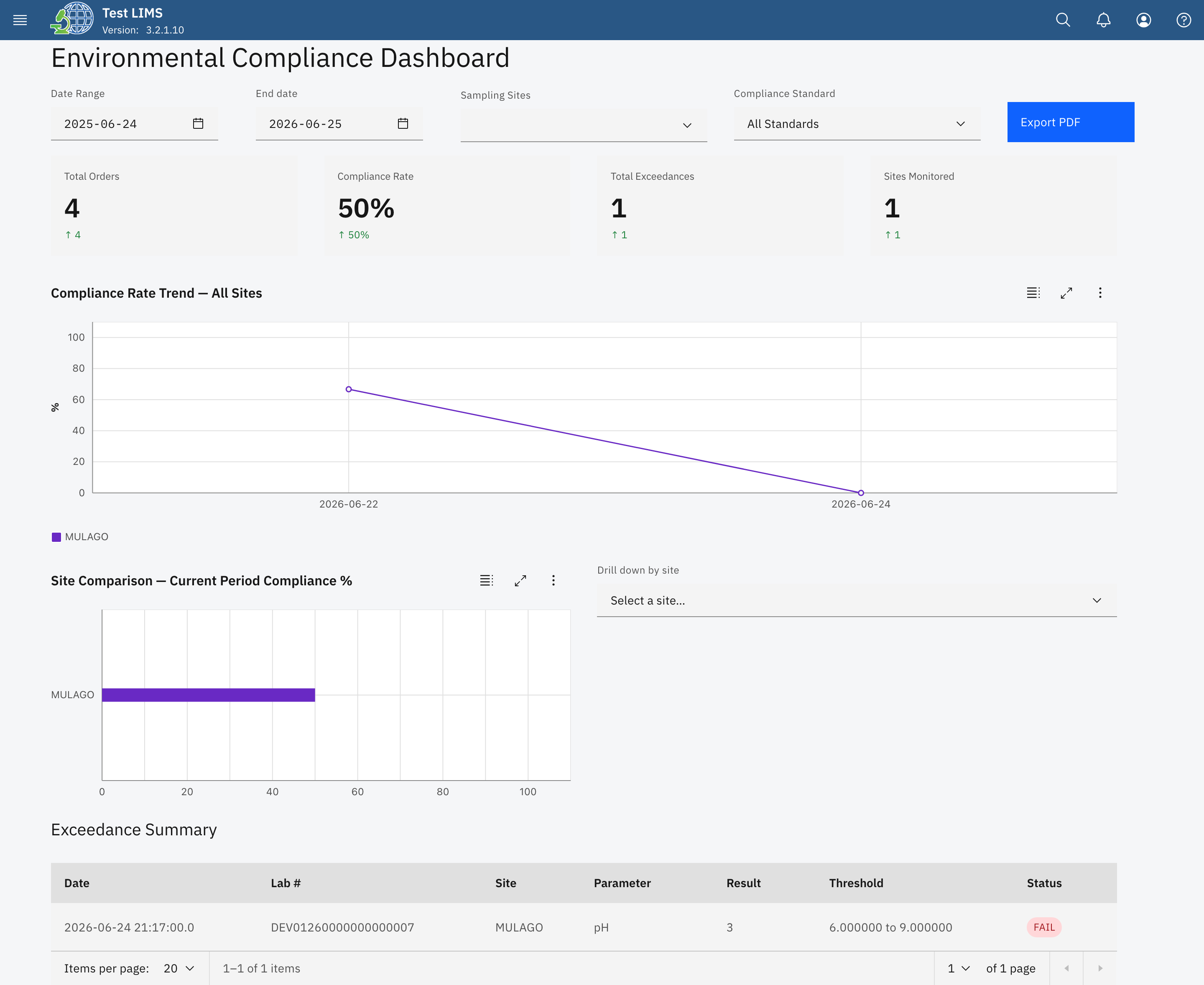
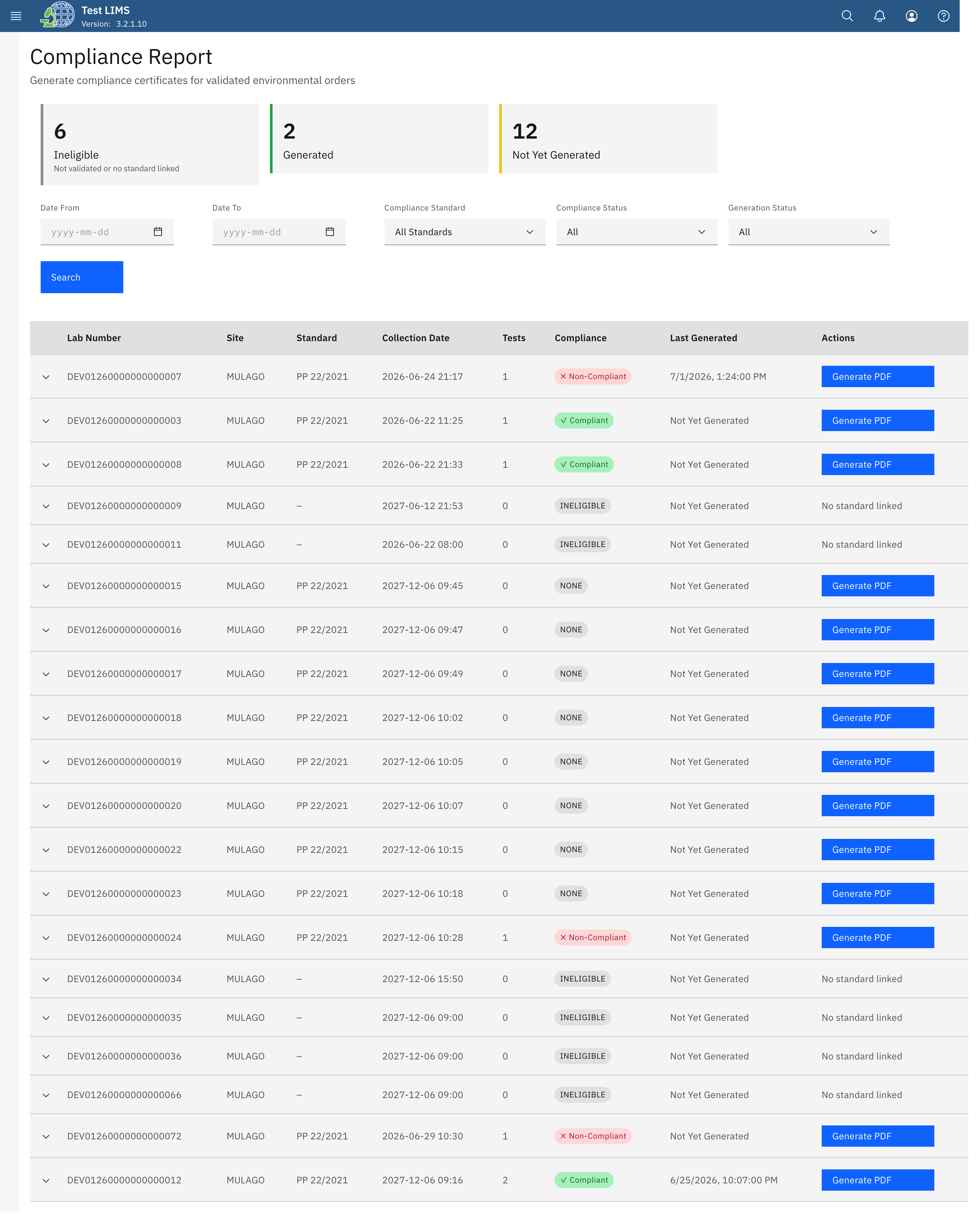
Evaluate any result against any configurable standard — environmental quality, food safety, pharmaceutical, or product specs — with automatic pass/marginal/fail flags and certificate-of-test export. See the full capability →
Interoperability
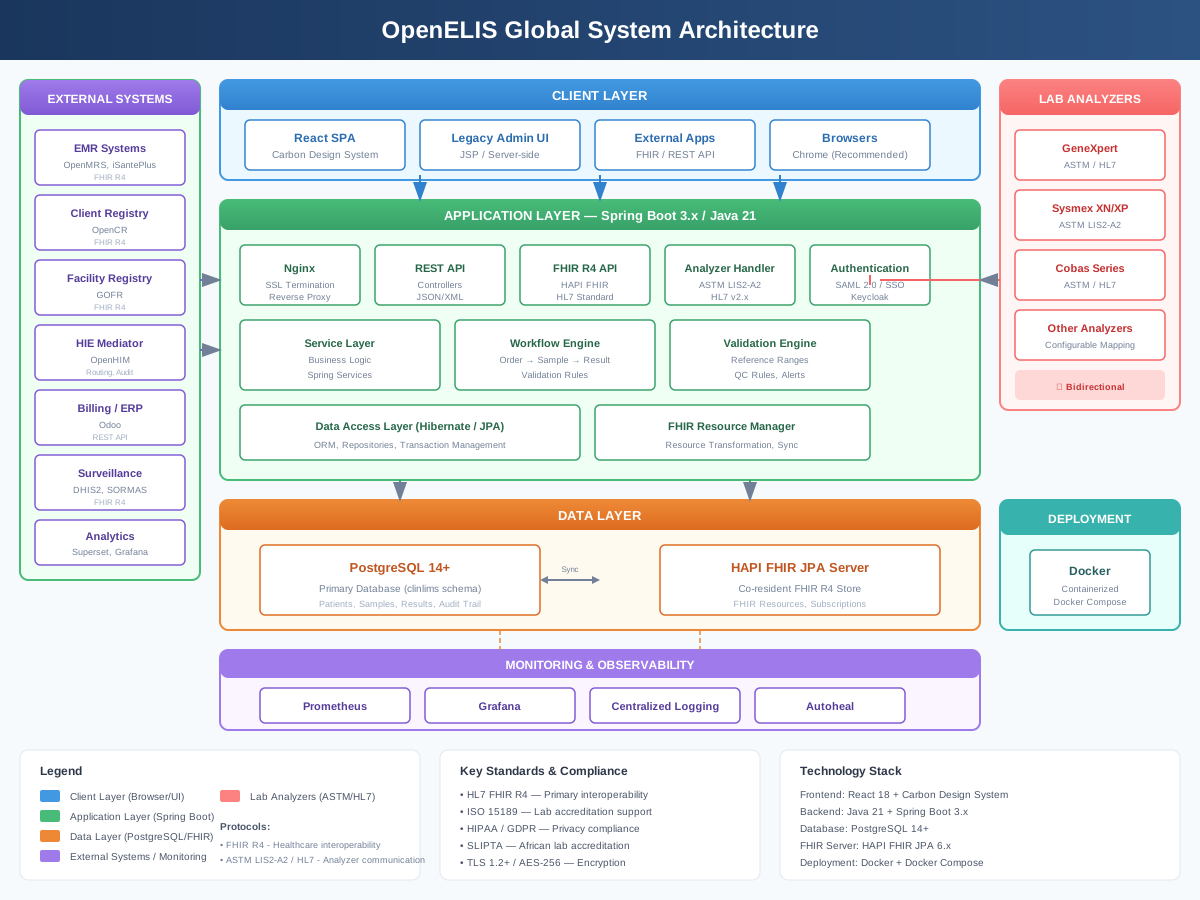
FHIR-first design connects your lab to EMRs, national health information systems, and other laboratories using international standards.
- HL7 FHIR R4 native — among the most comprehensive FHIR implementations in open-source LIS, with published Implementation Guides.
- EMR integration — real-time order/result exchange with OpenMRS, iSantePlus, and other FHIR-capable systems.
- National lab network — connect labs for referrals, outbreak coordination, and centralized reporting.
- Offline-first architecture — keep operating through outages; data syncs when connectivity returns.
- Disease surveillance — push confirmed cases to SORMAS and DHIS2 automatically.
Why it matters — Isolated lab data helps no one. When results flow to clinicians, programs, and national systems automatically, care improves and outbreak response accelerates — your lab becomes part of the response, not a bottleneck.
Analyzer integration
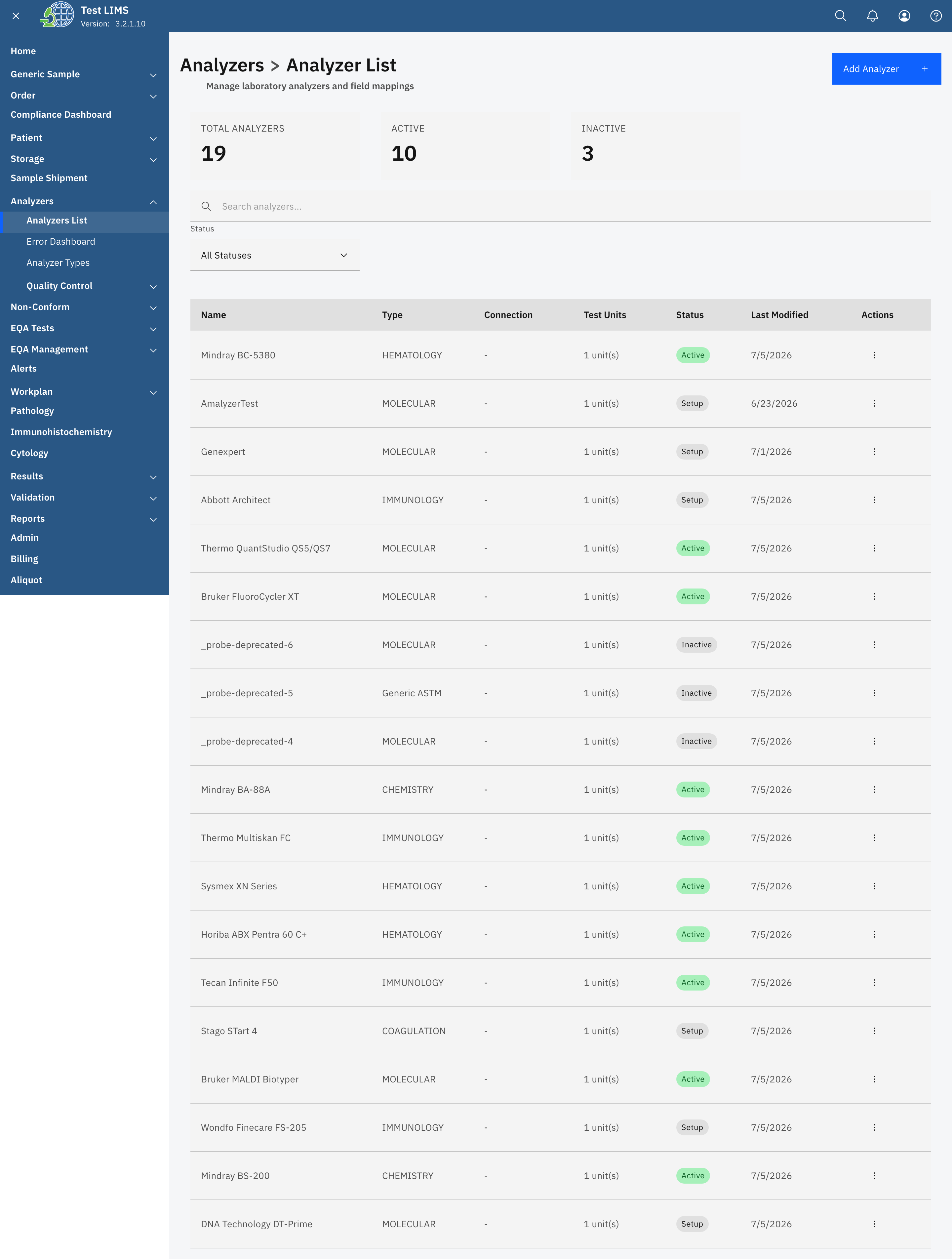
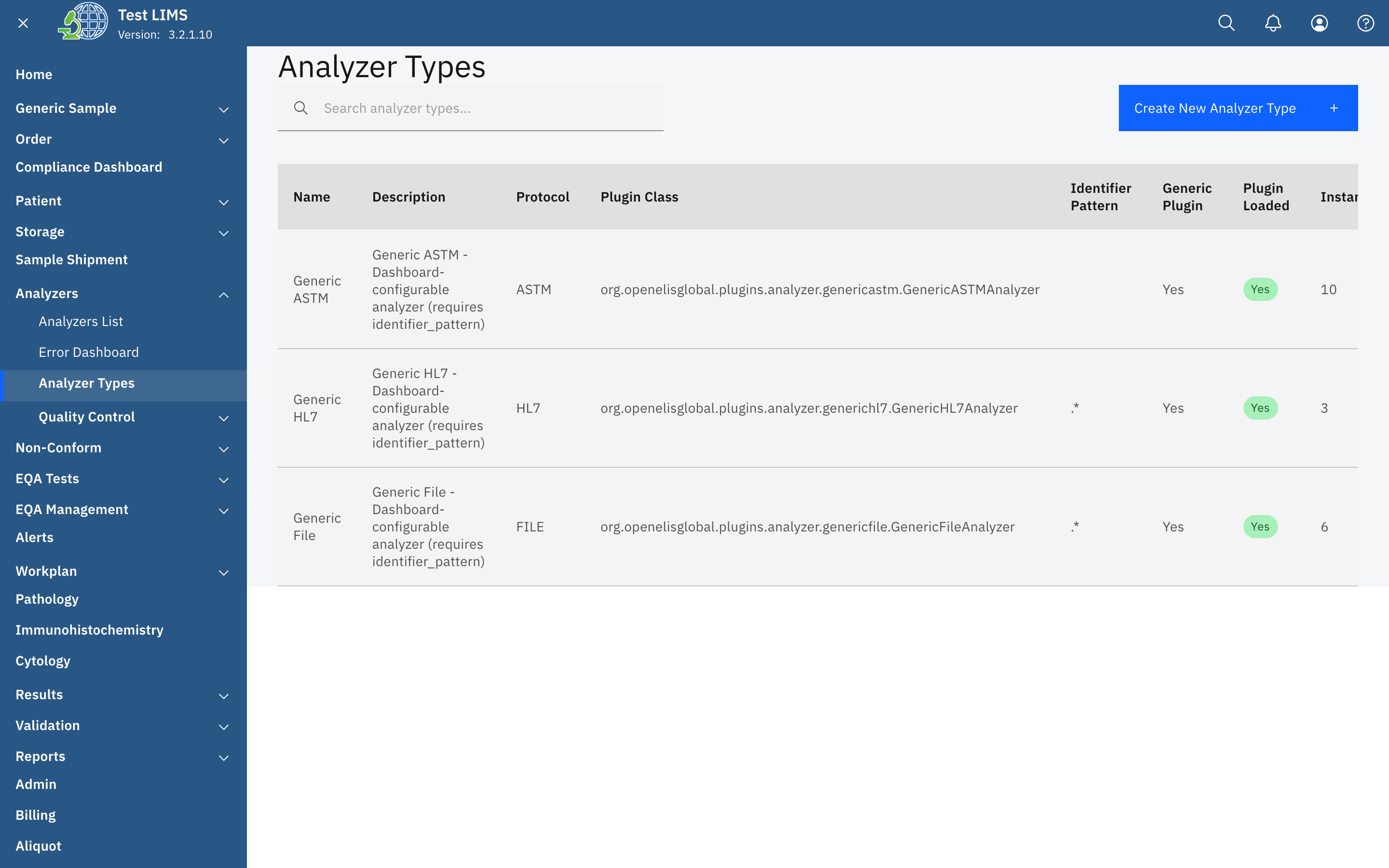
Connect any instrument without custom coding — OpenELIS speaks ASTM, HL7, and flat file. See the full capability →
- Generic protocol drivers — one user-configurable driver each for ASTM (E1394/E1381), HL7 v2.x over MLLP, and file import. Any conforming analyzer connects through them; there's no per-instrument development project.
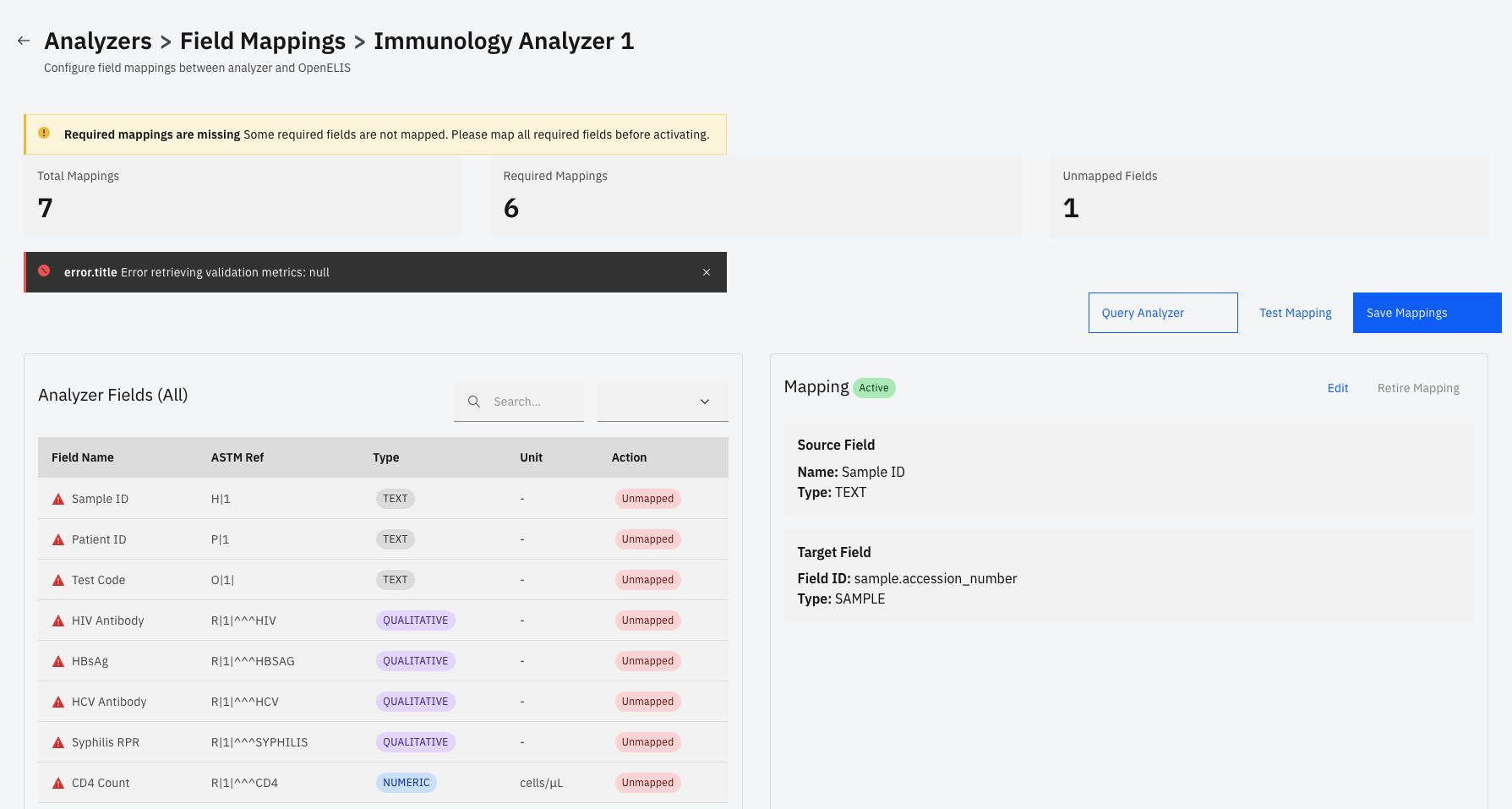
- Adding one is a mapping exercise — name the instrument, pick the protocol, give it an identifier pattern, map its test codes to yours. Done in the browser by your own staff, without a server restart.
- Bidirectional communication — send pending worklists down and receive results back automatically.
- Profiles that already ship — GeneXpert, Sysmex XN, Mindray BS/BC, Abbott Architect, QuantStudio, Tecan F50, Multiskan FC, FluoroCycler XT, Stago, Horiba and more, across eleven manufacturers — several validated against real production exports, not just vendor docs.
Why it matters — In most lab systems, a new analyzer means a quote and a timeline from the software vendor — and results get retyped by hand in the meantime. Generic drivers take the vendor out of that loop: the lab configures it, nobody waits on a release, and every manual transcription avoided is a patient-safety event avoided.
Inventory & equipment
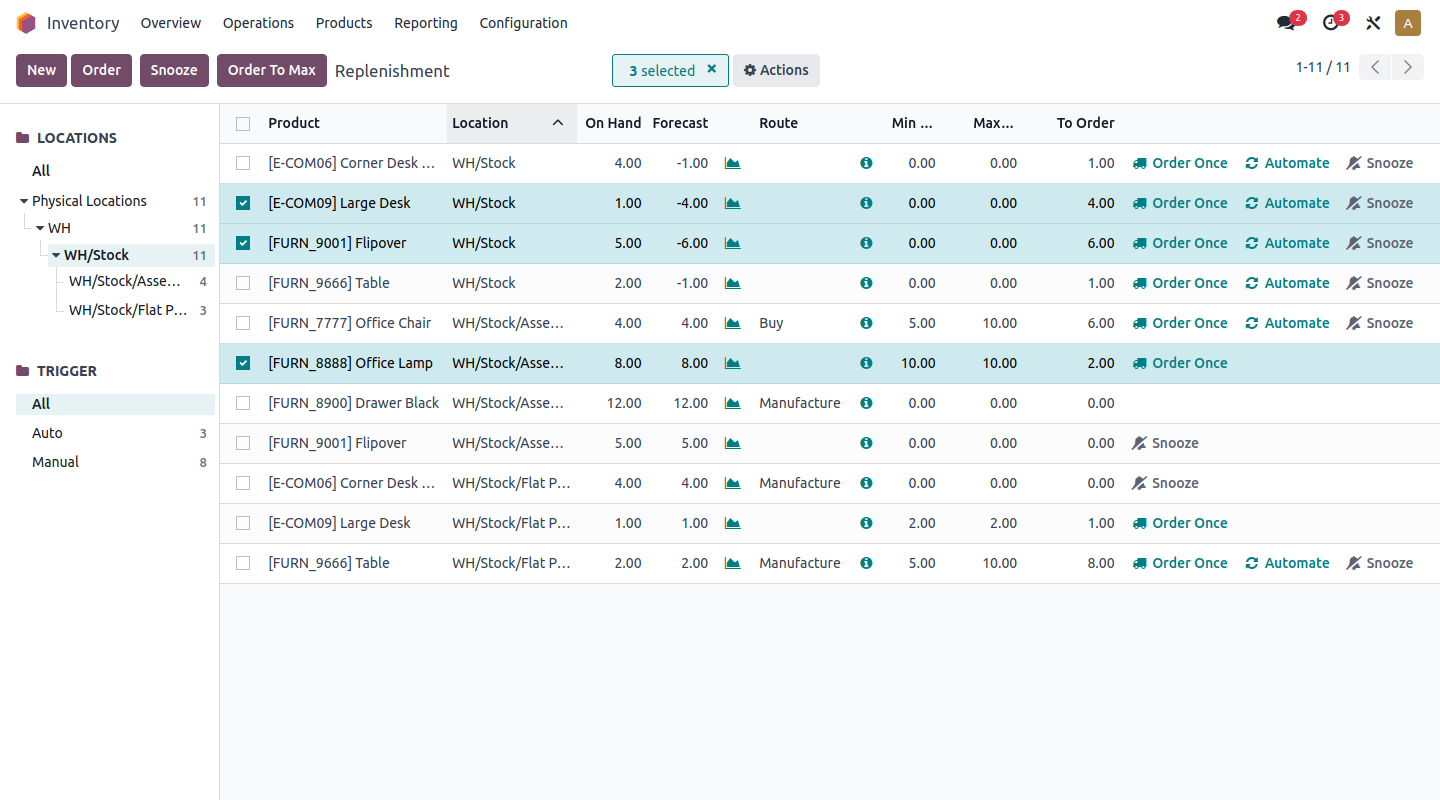
Never run out of critical supplies — lot-tracked inventory with optional Odoo ERP integration for billing and maintenance.
- Real-time stock monitoring across reagents, test kits, consumables, and equipment, with batch numbers and expiration dates.
- Automated reordering from configurable minimum-stock thresholds.
- FEFO compliance — first-expired, first-out to minimize waste. More inventory categories are being added.
- Equipment maintenance scheduling for calibrations and preventive service.
- Integrated billing — automatic Odoo invoice generation when orders complete.
Why it matters — Stockouts and equipment failures are among the most common causes of lab downtime. Knowing what you have, what's expiring, and what needs service keeps testing running and patients served.
Security & compliance
Enterprise-grade protection for the most sensitive data in healthcare — certified for use on high-security government networks.
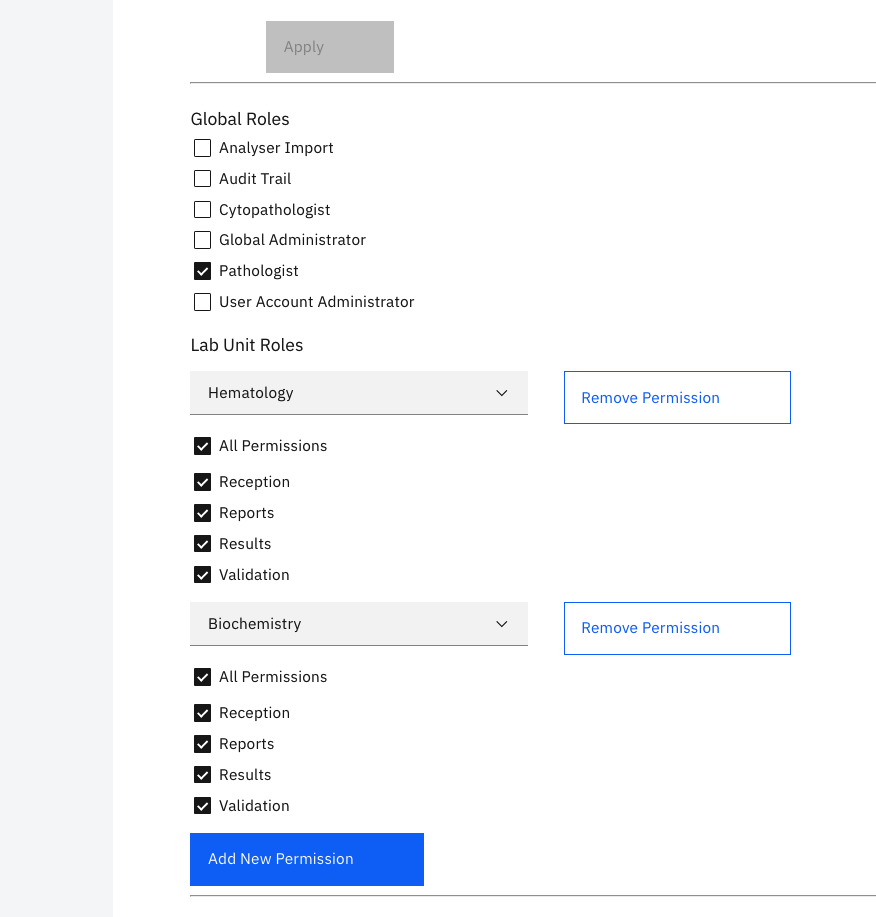
- Role-based access control — define exactly what each user can see and do.
- Single sign-on via Keycloak, SAML, or OAuth2.
- End-to-end encryption — SSL/TLS in transit, AES-256 at rest.
- Comprehensive audit trails — every login, entry, and modification logged with user and timestamp.
- Compliance-ready — configurable for HIPAA, GDPR, ISO, and local regulations.
Why it matters — Compliance isn't optional — it gates accreditation, funding, and trust. OpenELIS has undergone penetration testing and security scanning, so when auditors examine your data protection, the evidence is ready.
Monitoring & analytics
Real-time visibility into laboratory performance — what's happening now, not last month.
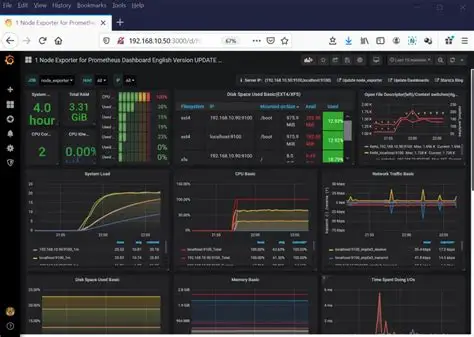
- Prometheus & Grafana dashboards — server health, transmission status, and performance with automated alerts.
- National reporting pipeline — data flows to central repositories via FHIR for dashboards, DHIS2, and analytics.
- Disease-surveillance integration with outbreak-tracking systems like SORMAS.
- Key performance indicators — turnaround times, rejection rates, and test volumes.
Why it matters — When a program manager or ministry needs numbers, or an outbreak demands situational awareness, waiting weeks isn't an option. Real-time visibility turns lab data into decisions.
On the roadmap: Catalyst
Catalyst is an AI-powered data assistant in active development. Using natural language, laboratory staff will generate custom reports, dashboard widgets, and data extracts — no SQL required. Its privacy-first design gives the AI access to the database schema only, never patient data, with all query execution local to your infrastructure. See the roadmap →
Proven at scale
OpenELIS Global powers national laboratory networks across Africa, the Caribbean, Asia, and the Pacific — Côte d'Ivoire, Haiti, Mauritius, Indonesia, Ethiopia, Vietnam, Tanzania, Lesotho, and more, with additional deployments in the DRC, Liberia, India, and South Sudan. When COVID-19 arrived, Mauritius's national system absorbed a 4,000% surge in testing volume and saved an estimated $4.5M versus commercial alternatives.
Read the Mauritius case study → The full evidence & value case →
Ready to transform your laboratory network?
Explore the live demo, or see how these capabilities come together for integrated One Health surveillance.
Try the demo One Health surveillance